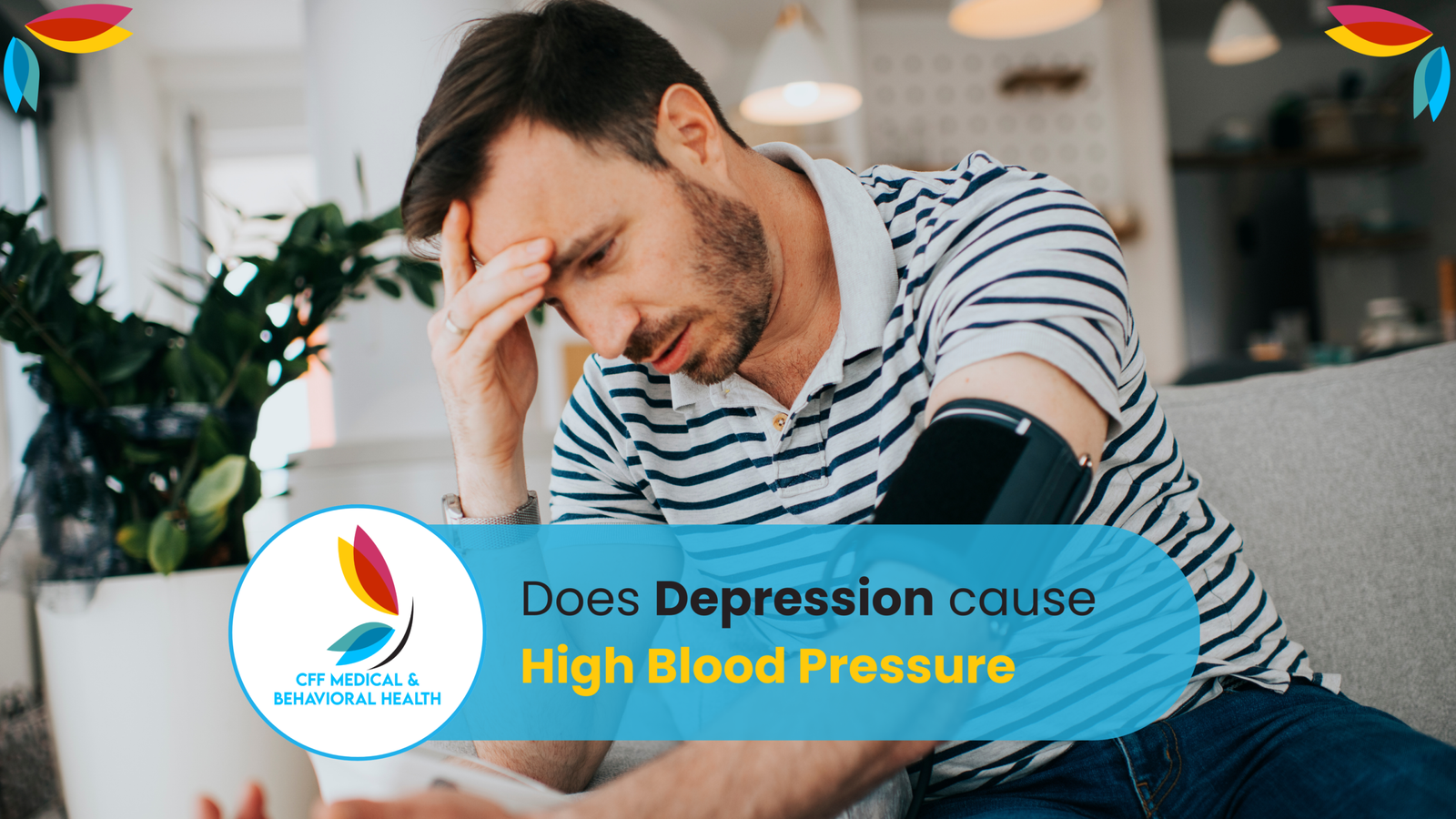
There is a version of such a question that people pose to their doctor and receive an ambiguous response to.
Something like “well, stress isn’t good for your heart” before the conversation moves on.
That is not a bad answer, but it omits a lot.
When you are struggling with depression, and someone has also drawn your attention to your blood pressure, or even if you are just curious as to whether the two are interrelated, have a more candid look at what is really going on.
The Short Answer Is Yes, But It’s Complicated
Depression does not turn on a switch and lead to hypertension as a blocked artery leads to a heart attack. It’s more gradual than that, and more indirect.
However, the physiological alterations when one is depressed, the chronic stress stimulation, the hormonal imbalance, and the inflammation do predispose conditions under which blood pressure is likely to increase over time.
This is also true in the reverse, that is, individuals who have uncontrolled hypertension tend to develop depression.
At this stage, researchers mostly consider the relationship to be bidirectional, i.e., each state can aggravate the other state, and neither of them is the ultimate cause.
That is no cop out answer. It is clinically significant, due to the fact that treating one and ignoring the other is likely to be ineffective.
What Depression Does to Your Body
This is the part that gets skipped in a lot of conversations about mental health. Depression is a full-body condition. It changes things you can measure in a lab, not just things you feel.
Cortisol stays elevated longer than it should
The primary stress hormone of your body is cortisol. It increases in the morning and slowly decreases throughout the day, in a healthy pattern.
In depressed individuals, such a pattern tends to disintegrate. The level of cortisol remains longer, and the body becomes deprived of its normal rhythm.
That matters for blood pressure because cortisol tells blood vessels to constrict, encourages the body to retain sodium and water, and stimulates the heart to work harder. A short burst of that is manageable.
Months or years of it is a different story.
The nervous system is running hotter than it should
Depression tends to push the autonomic nervous system out of balance. The sympathetic side, which is responsible for your fight-or-flight response, becomes overactive. The parasympathetic side, which handles recovery and rest, becomes relatively underactive. The result is a cardiovascular system that gets more surges in blood pressure and heart rate than it should, and less time to recover between them.
Inflammation
This one gets less attention but it matters. Depression is associated with elevated inflammatory markers in the blood. Chronic low-grade inflammation doesn’t cause high blood pressure directly, but it contributes to arterial stiffness over time, which is one of the mechanisms behind hypertension.
None of this means everyone with depression will develop high blood pressure. People vary. But it does mean that the biology of depression is hard on the cardiovascular system in ways that accumulate quietly.
Then There’s the Behavior Side
The physiology is real, but depression also changes how people live day to day. And a lot of those changes hit the cardiovascular system directly.
Sleep just gets worse. Most people with depression experience some degree of disrupted sleep, whether that’s difficulty falling asleep, waking up through the night, or sleeping too much but never feeling rested.
Poor sleep is one of the better-documented risk factors for high blood pressure. A bad night here and there doesn’t matter much. Months of bad sleep does.
Exercise drops off. Physical activity is genuinely one of the most effective ways to keep blood pressure in a healthy range.
Depression makes it harder to move. Not because people are lazy, but because motivation, energy, and the ability to initiate anything are all symptoms that depression specifically targets.
The activity that could help becomes the thing that feels most out of reach.
Diet shifts. Sometimes people with depression eat very little. Sometimes they lean into salty, processed or fast food because it requires almost no effort and delivers a brief moment of something resembling comfort. Both patterns work against blood pressure control.
Alcohol sometimes increases. It’s not universal, but it’s common. Alcohol disrupts sleep, raises blood pressure, and interacts with antidepressants in ways that can make both less effective. People don’t usually reach for it because they’ve thought it through. They reach for it because it works in the short term when nothing else does.
Medical follow-up falls apart. This is one that doesn’t get talked about enough. When you’re depressed, getting yourself to a doctor’s appointment, following up on lab results, filling prescriptions consistently — all of that becomes genuinely hard. High blood pressure that could have been caught early gets missed. Caught late, it’s harder to bring down.
A Few Things Worth Knowing About Antidepressants
Certain antidepressants have an impact on blood pressure, and it is not until an issue has occurred that patients learn about it.
The most common SNRIs are venlafaxine and duloxetine. In some patients, there is an effect of dose-related rise in blood pressure, and it is sufficiently well-documented that blood pressure must be monitored upon commencing or modifying these drugs.
It does not imply that they are the incorrect choice. It implies a decision that you need to make based on your overall view.
SSRI is usually more cardiovascularly neutral, and most people are normally treated with it as a first line treatment.
The effect of older antidepressants such as tricyclics, is that the blood pressure decreases when you suddenly stand up, and it does not sound so serious.
The elderly or any person with preexisting cardiovascular problems can be greatly impacted.
When you are on an antidepressant and your blood pressure has been on an increasing trend since you began taking it, this is a discussion you can have with your provider.
What Came First? Why It Matters Less Than You Think
Many of us are always confused as to which one came first.
Was it the depression that increased the blood pressure, or was it the physical stress of uncontrolled high blood pressure that led to the depression? In most instances, you cannot tell.
And for the purpose of getting better, you usually don’t need to.
What matters is that you have two conditions feeding off each other.
Depression makes the lifestyle changes that lower blood pressure harder to sustain.
High blood pressure only adds to physiological stress and can worsen mood.
If you treat the blood pressure with medication and don’t address the depression, adherence suffers and the behavioral contributors stay in place.
If you treat the depression and don’t monitor what’s happening cardiovascularly, you might miss something.
Good care looks at both at the same time. It’s not complicated in theory. It’s just not how most medical care is set up.
When This Is Worth Bringing Up With a Provider
You don’t need a confirmed diagnosis of both to have this conversation. If any of this applies to you, it’s worth raising:
- Your blood pressure has been edging up and you’ve also been struggling with your mood, energy, or motivation
- You’ve been on an antidepressant for a while and nobody has checked your blood pressure since you started
- You know you have depression but you keep falling off the routines, like exercise, sleep, diet, that are supposed to help with blood pressure
- You’re being told your hypertension isn’t responding to what should be working, and no one has asked about your mental health
- You have a family history of both heart disease and depression
That last one is worth noting. Both conditions have genetic components, and families that carry one often carry both. That doesn’t determine your outcome, but it’s useful information for anyone treating you.
How CFF Medical & Behavioral Health Approaches This
The providers at CFF, Dr. Martha Mukwada and Dr. Enestine Tasong, treat depression as part of your overall health, not as something separate from what’s happening in your body.
That means medication choices are made with your cardiovascular history in mind. It means follow-up appointments are long enough to actually track how things are changing. Initial evaluations are an hour.
That’s enough time to get a real picture.
Care is available in person in Columbus and by telehealth, with same-day appointments Monday through Friday.
If you’ve been managing either of these conditions and feel like you’re not getting on top of them, a longer appointment with a provider who treats both as connected might be the thing that shifts it.
One last thing: most people who have both depression and high blood pressure have only ever had them treated separately, by different providers who aren’t in communication with each other. That’s a gap. It doesn’t have to stay that way.
Ready to Talk? CFF Is Taking New Patients.
Book online: cffpsychmed.com/book-appointment
Call: +1 (614) 421-7969
Email: info@cffpsychmed.com
In person: 2700 E. Dublin Granville Rd, Suite 439, Columbus, Ohio 43231 Telehealth available across Ohio.