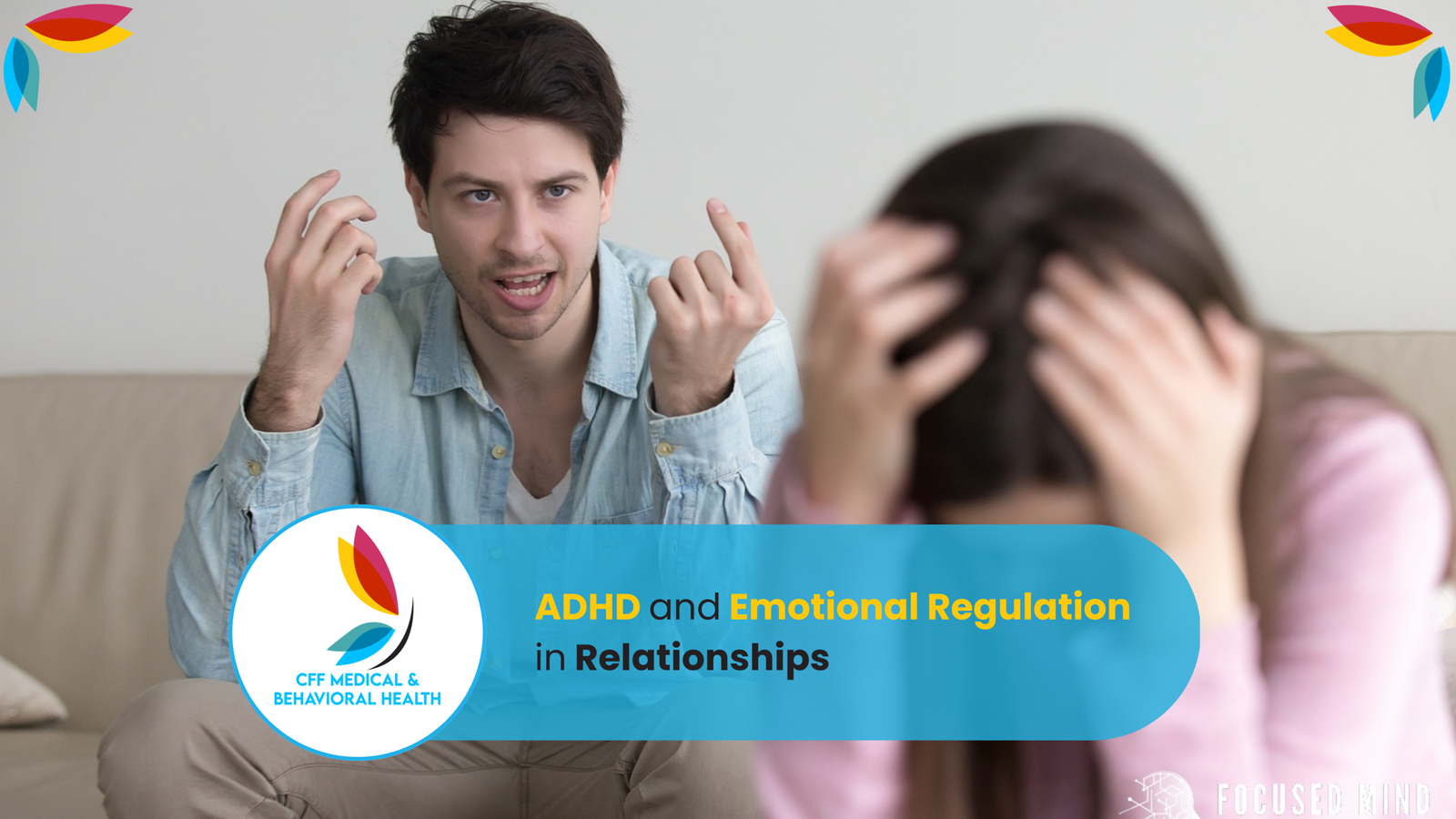
Attention-Deficit/Hyperactivity Disorder has its own strengths in a partnership, such as:
- Strong empathy
- Being spontaneous
- Passion
Nevertheless, it also creates certain obstacles that may exhaust both spouses.
The impact of the condition on the manner of managing the feelings of the individual is one of the least considered aspects of this condition.
As a result of not knowing how the ADHD brain works, unexpected changes in mood or extreme reactions may seem personal.
They have the ability to create serious divisions among individuals who love one another.
The hardest part of these emotional transformations is understanding them and the key to a healthier relationship.
This guide examines the critical relationship between ADHD and emotional regulation.
We’ll talk about the reason why these high emotions occur, how they manifest in your day-to-day lives and how you can approach them as a team.
The Connection Between ADHD and Big Emotions
The majority of individuals think about ADHD as the inability to concentrate, forget where keys are, or fidget.
Although the characteristics are typical, they are only half of the story. The brain differences that cause difficulty in focusing also cause difficulty in controlling feelings.
What is Emotional Dysregulation?
Emotional dysregulation refers to experiencing difficulty in controlling the magnitude and length of your emotions.
To an individual with ADHD, the brain would have difficulty filtering instant emotional reactions. Once it gets you, it gets you good.
Think of the brain’s executive functioning system as the brakes on a car.
Consider the executive functioning system of the brain as the car brakes.
The brakes in an ADHD brain take up to a few seconds to react.
This wait enables frustration to turn immediately to anger, or some small concern to escalate to great anxiety.
How ADHD Emotions Affect Your Partnership
When you are sharing your life with another person, your emotional temperaments will always be colliding.
When a partner cannot control their emotions, it alters the whole state of the house.
Miscommunications occur more often, and minor conflicts may easily develop into significant contradictions.
The Challenge of Rejection Sensitive Dysphoria
Rejection Sensitive Dysphoria (RSD) occurs in a large number of adults with ADHD. RSD is a severe emotional susceptibility to imagined criticism or rejection.
Even a simple request like, “Can you please load the dishwasher?” might sound like a harsh attack to someone experiencing RSD.
This is a challenging cycle produced by this sensitivity. The non-ADHD partner might also feel that they have to walk on eggshells not to upset the ADHD partner.
Meanwhile, the partner with ADHD is actually insulted, lonely and misunderstood.
Quick Tempers and Impulsive Reactions
The fundamental symptom of ADHD is impulsivity. This might be fun, spontaneous adventures; however, it applies to speech and emotional responses.
An individual with ADHD may retaliate with a sharp remark before their brain even has time to keep pace and comprehend what is going on.
These unthinking reactions are seldom intended to harm. They are no more than a product of a brain that is prone to taking action before it thinks.
Nevertheless, the effects they have on a partner are still extremely tangible, resulting in offended feelings and resentment.
Recognizing the Signs in Your Daily Life
Emotional dysregulation is manifested differently in all individuals. It is upfront and vocal at times, and other times it leaves an individual in a state of utter silence.
The identification of the patterns, which can be applied to avoid the cycle, is vital.
Some of the common expressions of emotional dysregulation in relations are the following:
- Rapid mood changes. The capability to feel incredibly happy and incredibly annoyed in a few minutes, because of a minor inconvenience.
- Overblown reactions. Responding to small criticisms with intense defensiveness or deep despair.
- A total overwhelm at the time of an argument, resulting in total mental blockage of the individual, in which one is not able to speak or even process any form of information.
- Difficulty settling down. Settling down and taking hours or even days to settle a small argument.
- Hyper-focusing on the negative. Fixating on a single bad interaction and ignoring the positive parts of the day.
How to Deal With Emotional Highs and Lows
The development of a pleasant relationship in the presence of ADHD takes time, collaboration, and specific plans.
Emotional dysregulation cannot be simply wished away, but you can develop mechanisms to handle it.
Pause Before You React
The most powerful tool in an ADHD relationship is the “pause.”
The ADHD brain operates on an instant basis, and therefore, you have to provide an artificial distance between a stimulus and a reaction.
Agree as a couple that either person can call a time-out during a tense moment.
This is an opportunity to walk away. Get a few deep breaths. Allow the early emotion to pass.
A fifteen-minute break can easily transform an enormous argument into a peaceful, constructive discussion.
Communicate When the Dust Settles
Do not attempt to settle a big relationship problem when the passions are up. Logical reasoning is pushed aside when the brain is overwhelmed by strong feelings.
Wait until both partners feel grounded and relaxed. Bring up the issue gently.
This approach reduces defensiveness and fosters genuine understanding.
Define Healthy Boundaries Together
Boundaries are useful in avoiding resentment, which accumulates over time. Talk about your boundaries in terms of:
- Arguments
- Communication styles
- Personal space
When one of the partners requires time to relax after working and then address the household chores, then enforce that.
Predictability is a calming factor for the ADHD brain. Emotional flare-ups occur a lot less when the partners understand what to expect.
Why Professional Support Makes a Difference
Attempting to treat extreme emotional dysregulation independently is extremely alienating. You do not need to calculate this on your own.
Professional help can help in a significant way not only to your mental condition, but also to your relationship.
You may identify your emotional triggers, and together with a qualified psychiatric provider, you may devise coping strategies, which, in reality, may be effective.
They are also able to discuss medication that may assist in improving executive functioning so that your brain gets the chemical assistance it requires.
A neutral environment created through therapy is also a safe environment to untangle communication problems.
It enables both partners to feel listened to, justified, and provided with useful tools in the future.
Get Support
At CFF Medical & Behavioral Health, our team understands the complexities of ADHD and how it impacts your daily life.
We provide care designed to help you regain balance.
From our comprehensive 1-hour initial evaluations to our flexible telehealth options, we take the time to listen to your needs.
Schedule your appointment with CFF Medical & Behavioral Health today.