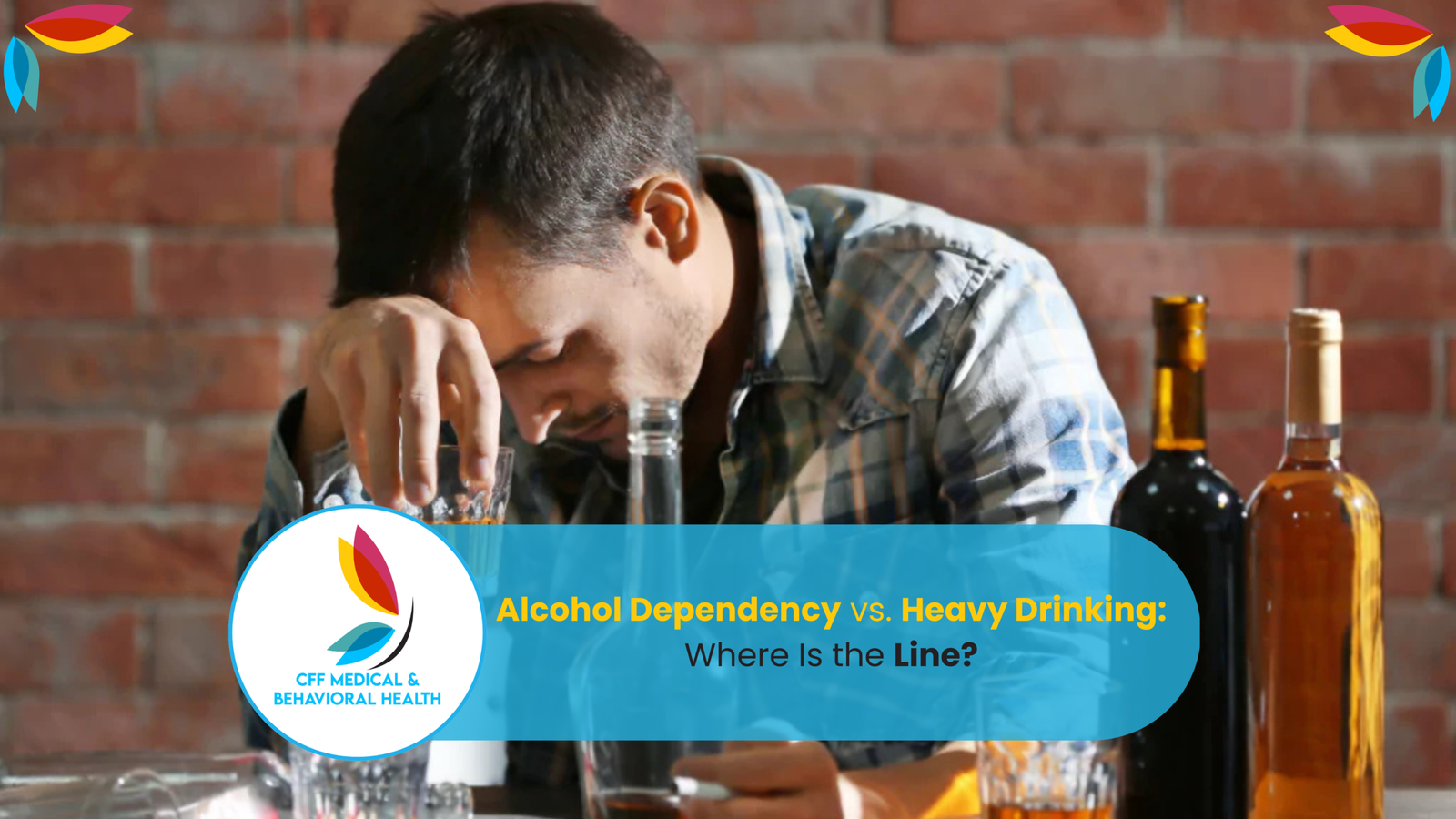
Here is something most people will not say out loud: a lot of people who are dependent on alcohol do not think they are. They think they drink too much.
They know it is probably not great. But dependent? That feels like a word for someone else.
This piece is about that gap between “I drink a lot” and “I cannot stop.” Because those two things are genuinely different, and confusing them is part of why people wait so long to get real help.
First, What Heavy Drinking Actually Means
Heavy drinking is not a personality type. It is a pattern, and it has a clinical definition. More than four drinks in a day for men, or more than fourteen in a week. For women, more than three in a day or seven in a week. Binge drinking sits inside that category too.
People who drink at those levels are doing damage to their bodies. That is just true. Liver, heart, cancer risk, and mental health. None of it is neutral. But here is the thing: they can stop. It might be unpleasant. They might sleep terribly for a week and feel irritable and hate everyone around them. But the body will cooperate. It will not revolt.
That is not a small distinction.
What Dependency Means in Practice
When someone has been drinking heavily for long enough, the nervous system changes. Not metaphorically. Physically.
The body and the brain begin to self-regulate in the presence of alcohol and thus, when deprived of it, they do not self-regulate.
What that feels like: shivering, chills, heart pounding, crushing fear, at times seizures. Real withdrawal. And unlike the withdrawal people experience from many other substances, alcohol withdrawal can actually kill someone if it goes unsupervised.
That is not common, but it is real enough that it has to be said.
So the difference is not really about how much someone drinks. It is about what the body does when they stop.
The Slow Slide Between Them
Nobody decides to become dependent. It does not happen overnight. It tends to happen across years, in small enough increments that there is never an obvious turning point.
The tolerance goes up a little. Then a little more. Drinking alone starts to feel normal. The occasions where you really need a drink to feel okay multiply. And then one day you attempt to go a day or two without it and you are really ill, and you do not know what to attribute to that.
A few things that are likely to accelerate that:
- Using alcohol to cope with something. Fear, sadness, long-term stress, sorrow. When alcohol is used to solve an emotional problem for you, the brain starts to classify it as necessary. That is a different relationship with it than just enjoying a few drinks.
- Family history. Not a guarantee of anything, but the brain’s response to alcohol is partly genetic. Some people’s brains are wired to like it more and need more of it faster.
- One year of heavy drinking and 5 years of heavy drinking are not comparable to each other in terms of their effects on the brain.
Signs Worth Paying Attention To
Not every sign will apply to everyone. But some of these, especially the physical ones, should not be brushed past.
Physical:
- Shaking or sweating in the mornings, and it stops once you drink
- Nausea or anxiety that tracks specifically with not having had alcohol
- Needing more than you used to just to feel like yourself
- Sleep that is genuinely broken and has been for a long time
Behavioral:
- Drinking alone most of the time
- Not telling your doctor, your partner, your close friends the real number
- Planning your life around having access to alcohol
- Trying sincerely to cut back and watching that not hold, more than once
- Noticing that basic things, a hard conversation, a social event, just a normal stressful day, feel unmanageable without drinking first
The Practical Reason This Distinction Matters
When a person is a heavy drinker and they wish to quit, they are likely to be able to do so with support. A strategy, a bit of responsibility, perhaps medicine to aid in cravings. Hard, but doable outside a medical setting.
If someone is physically dependent and they stop abruptly without medical oversight, they are taking a real risk. Seizures. Severe disorientation. In extreme instances, still worse. It is not hypothetical.
This is not hypothetical. It is why truly dependent people need a provider involved in how they stop, not just motivation.
Getting this wrong in the direction of underestimating dependency is not a harmless mistake.
When to Actually Do Something About It
You do not need to have lost your job or your family to deserve support. A few honest questions:
- Have you made more than one attempt to quit, and actually have been unable to?
- Are you physically ill or feel shaky when you skip a day or two of drinking?
- Do you conceal the extent of your drinking from people who are close to you?
- Is the thought of a week without alcohol something that makes you more likely to think that you are panicking than inconvenienced?
One strong yes is enough of a reason to talk to a provider. Not because it means everything is catastrophic, but because it means something is happening that deserves real attention.
What CFF Offers
CFF Medical and Behavioral Health in Columbus is working with individuals on both extremes. Alcoholics who would like to beat the problem before it escalates. Dependents who require medical assistance to quit safely.
The care begins with an adequate assessment, one that examines the entire picture, including any mental illnesses that tend to co-occur with alcohol issues, anxiety, depression, PTSD. From there:
- Medical oversight through detox for those who need it
- Medication-assisted treatment to manage cravings
- Therapy that actually addresses what is driving the drinking
- Dual diagnosis care when there is more than one thing going on
- Follow-up that continues past the first few weeks
Telehealth available. Open seven days a week. Same-day appointments often possible. Most major insurances are accepted.
If Any of This Landed
Then it probably landed for a reason. You do not have to have it all figured out before you reach out.
Book a confidential appointment: cffpsychmed.com/book-appointment
Call: (614) 421-7969
If you are in crisis right now, call 988 or go to the nearest emergency room.