Nothing feels good anymore. Your favorite playlist sounds like noise. You skim over your interests without even thinking.
Friends take you out, and you’d prefer to be at home, not because you don’t want to go, but because you literally cannot see yourself having fun.
It is anhedonia, and it is one of the most aggravating aspects of depression. It is not being negative or not being motivated.
Your reward systems in your brain are not functioning as they are supposed to, and the things that were previously lighting you up are barely registering.
Why Everything Feels Flat
Depression interferes with your neurotransmitters. Mainly dopamine and serotonin. These chemicals are expected to convey joy and satisfaction.
Your brain has a hard time processing rewards when they are out of balance.
You can rationally understand that something ought to be pleasant, but it simply does not feel that way.
You’ll notice things like:
- Food is unappetizing, even your comfort food.
- You cannot get excited about plans, even ones you were fond of.
- It all takes too much work and effort – even getting out of bed.
- You are unable to make simple decisions because your mind is foggy.
These can be clinical symptoms that require actual treatment.
Getting Movement Back Into Your Days
This is one method, known as behavioral activation, that may seem counterintuitive. In essence, you end up doing things before you even feel like doing them.
Depression would have you wait until you become motivated, which only keeps you in the loop.
Here’s what that looks like:
- Pick one small thing to do today, whether you want to or not
- Put activities on your calendar like appointments you can’t skip
- Notice what happens after – not how you felt going in, but after
- Build from there, adding a little more as you go
The weird part? It is not how you feel before you do something, but after that. You just have to take the step.
When Medication Makes Sense
Sometimes your brain needs more direct intervention. Antidepressants alter the levels of these neurotransmitters, which we discussed earlier.
They do not numb you and conceal what’s wrong; they are adjusting the chemistry that is making it impossible to work.
Different medications work in different ways:
- SSRIs tend to stabilize mood overall
- SNRIs can boost both mood and energy levels
- Some medications specifically target anhedonia when it’s severe
- Your provider might try combinations if one isn’t enough
Getting the right medication often takes some trial and error, which is frustrating. But when it works, it’s like someone turned the lights back on.
Dealing With the Negative Loop
Depression lies to you constantly. It informs you that nothing will be fun anymore. That trying is pointless. That you’re the problem.
These thoughts feel absolutely true when you’re in them. This makes them dangerous.
Cognitive work involves catching those thoughts and questioning them:
- What’s the actual evidence that this will never get better?
- Am I predicting the future or stating a fact?
- Would I say this to someone I care about?
- What would a more neutral way of seeing this be?
What Getting Better Actually Looks Like
You’ll have days where you feel almost normal, then wake up the next morning right back in it. That’s how it might go.
The point is to have someone in your corner who knows what you’re dealing with and can adjust your treatment as you need it.
At CFF Medical & Behavioral Health, appointments run longer than the standard ten-minute med check.
You actually have time to talk about what’s happening, what’s working, and what isn’t.
The providers know that depression treatment isn’t one-size-fits-all, and they’re willing to work with you until you find what actually makes a difference.
You Don’t Have to Keep Living Like This
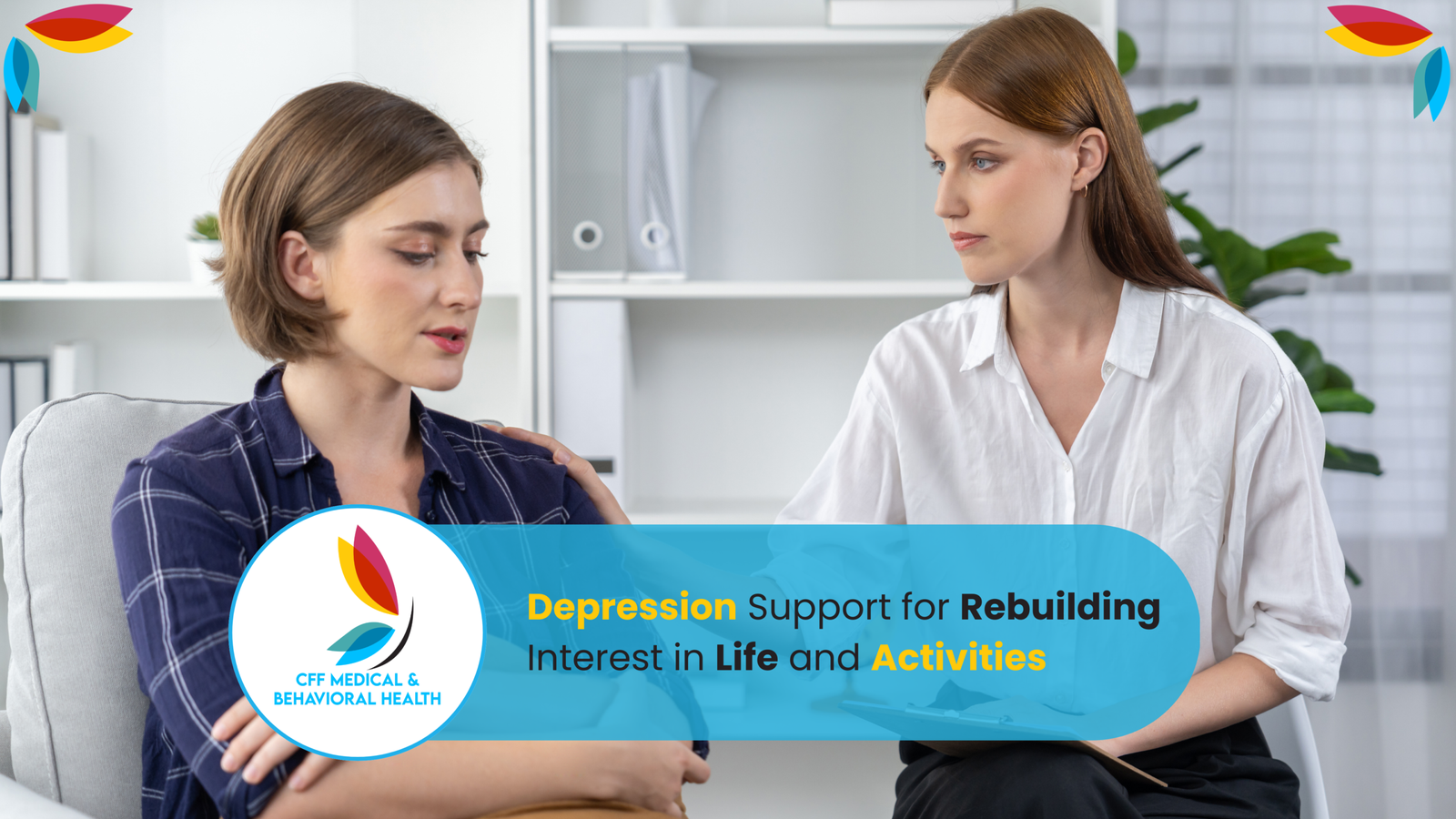
A diminished capacity to enjoy anything does not signify a permanent condition. Through a suitable therapeutic strategy and attentive practitioners, regaining your former sense of well-being is achievable.
CFF Medical & Behavioral Health treats depression with both medication management and real conversation about what you’re going through.
Call (614) 421-7969 or go to cffpsychmed.com to schedule an appointment. You deserve care that gives you enough time to be heard.
FAQs
When do I start feeling better?
It is a matter of what you are doing and the intensity of the situation. Medication normally takes one or two months to have an effect.
It is possible that changes in behavioral changes can manifest themselves sooner, or they can be delayed.
Must I have medication, or is talking therapy alone an option?
For slight depression, perhaps just counseling and behavioral adjustments will suffice.
Nevertheless, for more significant or serious forms of this condition, drugs are usually necessary because the chemical issue is too substantial.
What happens if I try an approach and still feel no difference?
That is entirely common in the beginning. The goal isn’t immediate joy – it’s about establishing opportunities for your mind to relearn how to experience emotions. Consistency is key.
Allow time and monitor minor improvements instead of anticipating huge transformations straight away.