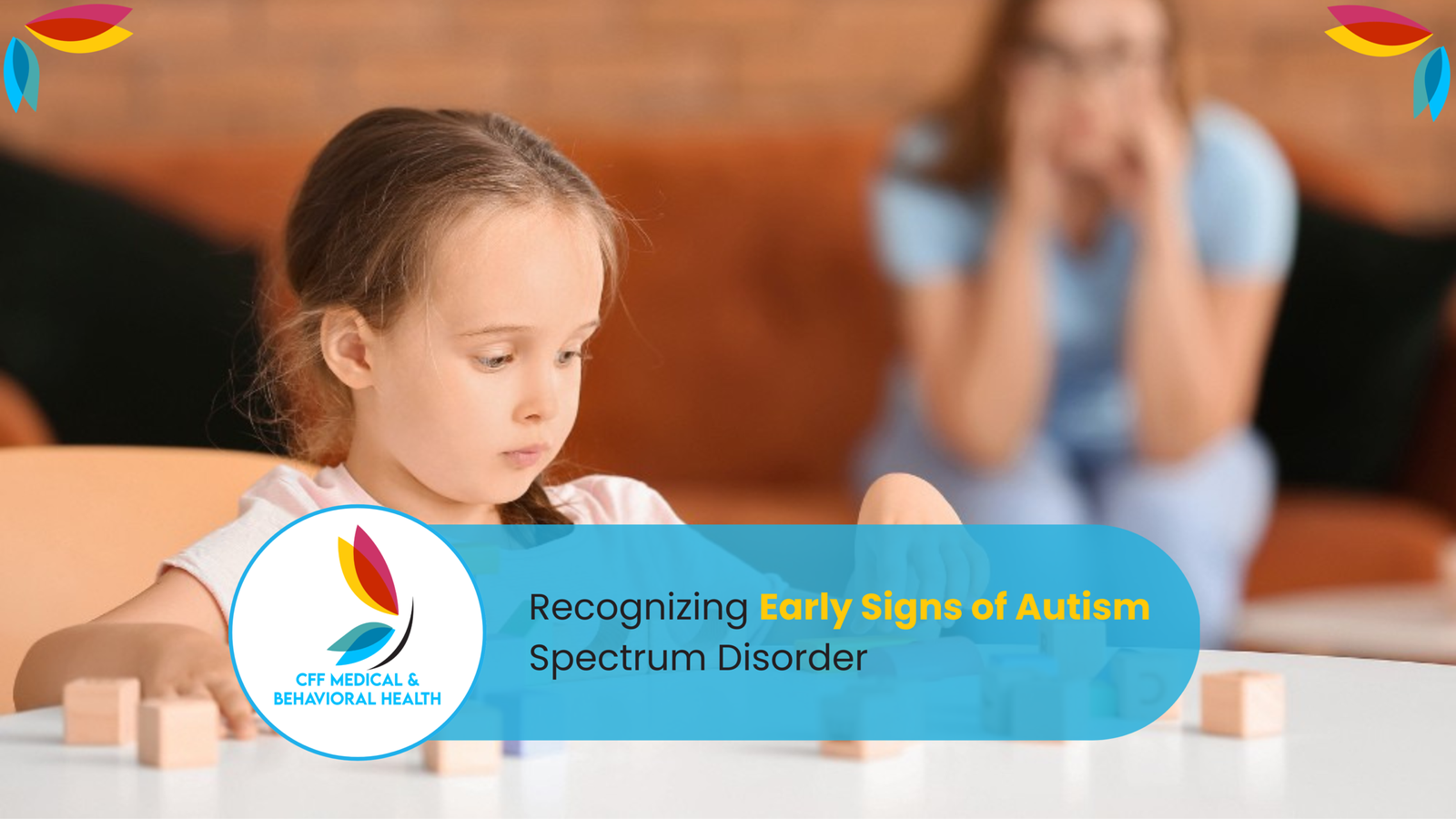
All children grow and develop differently, which is perfectly okay.
However, some behaviors that children display might lead us to believe that there is a possible underlying condition.
Understanding your autism background – or your child’s – is an important first step.
Autism Spectrum Disorder is a disorder that must be addressed early by the parent since it might cause greater improvement in children later in their lives.
The child’s age is directly related to how much the child will gain from the intervention, and for this reason, parents are important in identifying and initiating services for children.
What Is Autism Spectrum Disorder?
Autism Spectrum Disorder is a condition that affects a child’s neurodevelopment.
It manifests differently in every individual, with differences in social communication and behavioral responses to stimuli.
People often wonder, is everyone on the spectrum in some way – and while the short answer is no, the “spectrum” component of the disorder name is relevant since some individuals on the spectrum might need to be fully supported to the extent that they are dependent on a caretaker, while there are others that are fully verbal and independent.
ASD is not a condition that is meant to be diagnosed and “treated” like an illness that must be cured.
ASD is a part of a person’s neurological makeup.
People can actually benefit greatly from early intervention in behavior management, communication support, and, in some cases, medication.
Initial Indicators in Children
Social Communication and Interaction
How a child relates to people in their immediate surroundings and engages with them is a consistent early indicator of ASD. Possible examples include:
- Absence of or a notable lack of joint attention
- Marked lack of and reduced eye contact
- No babbling by twelve months or no single words by sixteen months is a form of delayed speech/language development
- An inability to understand or respond to the call of their name
- Lack of gesture and form of communication, such as waving, reaching, or nodding
If several signs cluster together, these are not, as some may put it, “quiet” or “he’ll grow out of it,” and it’s better to consult a specialist.
Restricted and Repetitive Behavior
In addition to differences in social communication, ASD frequently entails the presence of restricted and repetitive patterns of behavior or interests.
Understanding the signs of severe autism early can make a significant difference in outcomes. These may include:
- The stereotyped motor movements include spinning, rocking, and hand-flapping
- Insistence on sameness, which includes distress over trivial alterations in routines or the surrounding environment
- Highly restrained and obsessive interests, including a very narrow and specialized interest in certain subjects or objects
- Atypical reactions to sensory input, which can be hyper- or hyposensitivity to sounds, touch, texture, and light
Signs That Older Children and Adults May Exhibit
Children with ASD are not all diagnosed at a younger age.
A lot of people with ASD – particularly, people with a normal or high intellectual ability are not diagnosed till their teenage or adult years.
It is also worth mentioning that girls with autism are often underdiagnosed as they can effectively mask their symptoms compared to their male peers.
The symptoms of high-functioning autism in adults may be, in fact, especially easy to ignore.
- Pragmatic language difficulties, which involve the comprehension of sarcasm, social subtext, and other unwritten social rules
- Reciprocal conversation difficulties, which may involve dominating the conversation with their interest or struggling to “read” the other speaker
- Mental exhaustion due to “masking,” or having to actively imitate social behaviors to blend into an environment, which is mentally draining
- Personal sensory sensitivities that may lead to difficulties in completing daily tasks, including eating and dressing, or being in enclosed large crowds
- Secondary presentations including anxiety and depression, often occur because the underlying ASD has not been recognized
When To Seek an Evaluation
If a number of these signs are present in an adult, a teenager, or a child, the next step is to obtain a thorough clinical assessment.
Recognizing how autism differs from typical emotional expression is also something a trained clinician will assess during this process.
A formal assessment of ASD consists of:
- An in-depth developmental history
- Structured behavioral and observational studies
- The use of behavioral assessment tools that are consistent with the DSM-5 criteria
To determine whether you should approach a specialist, you don’t need a long list of symptoms. Even a single concern is sufficient.
Customized, Individualized, and Empathetic Care at CFF Medical & Behavioral Health
Here at CFF Medical & Behavioral Health, we conduct tailored behavioral health evaluations and provide continuous individualized care for the entire lifespan of the autism spectrum.
Our board-certified specialists are dedicated to listening to you and providing thorough evaluations in order to develop a lasting and realistic treatment plan.
We accommodate same-day appointments and offer online visits every day of the week.
Book a visit. Contact us at (614) 421-7969.
FAQs
What’s the difference between ASD and ADHD?
Both ASD and ADHD are neurodevelopmental disorders; though they may be combined, they differ in their characteristics.
The difference in social communication and behavioral limitations characterizes ASD, and the regulation of attention, impulsivity, and hyperactivity is the main feature of ADHD.
Does CFF Medical & Behavioral Health assess autism evaluations and do they take insurance?
Yes, CFF has several contracted options for insurance, including Aetna, Cigna, Anthem BCBS, and United Healthcare etc. You can find details on our Insurance page.