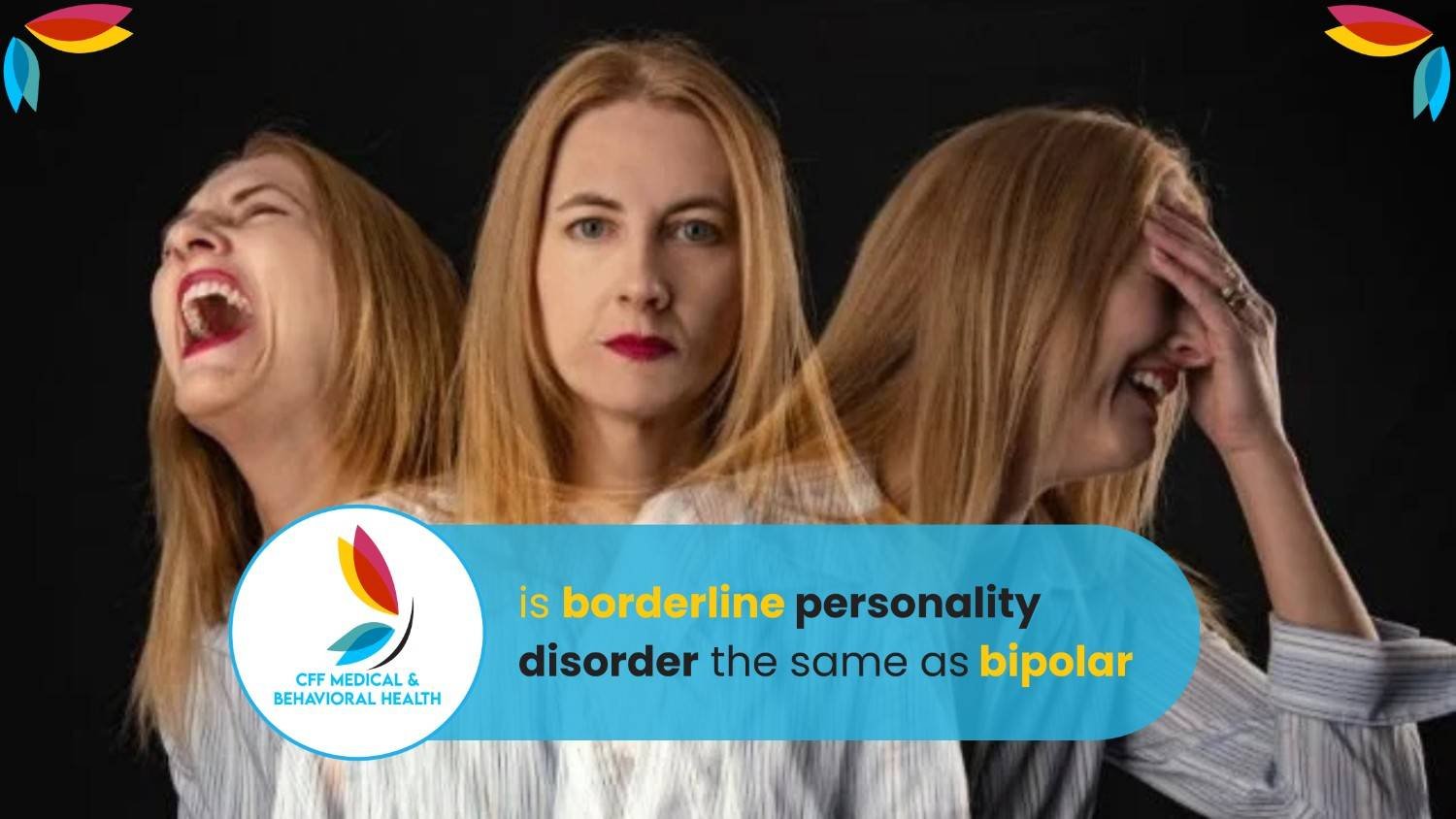
Whether or not bipolar and borderline personality disorders are synonymous terms is a question that has baffled many people. The two are often confused.
There are certain similarities between them, yet at the same time, they are very different.
It is important to realize that difference counts, as the correct diagnosis would lead you to the correct care.
They Can Look Similar – Here’s Why the Confusion Happens
Each of the two conditions is characterized by high emotional fluctuations, impulsiveness, and the inability to sustain a regular relationship.
It is no wonder then that people confuse them with each other, or why a person may be confused as one or the other.
This is where the overlapping is likely to occur:
- Sudden or disproportionate mood swings
- Impulsivity – making choices that do not feel in a position of control
- Relationship strain – conflict, tension, or emotional intensity in relation to individuals around one
- Low moods that impair everyday existence
This is one of the most important things to understand when looking at BPD vs bipolar.
What Is Different About Bipolar Disorder
Bipolar disorder is an affective disorder. Understanding mood disorders vs personality disorders is key here – it is characterized by clearly defined episodes, i.e., periods of mania or hypomania (high-energy states) alternating with depression.
These episodes may be days, weeks, or even months.
The main characteristics of bipolar disorder:
- Mood episodes are maintained
- Mania may include decreased sleepiness, grandiosity, and racing thoughts
- The mood gets back to a more stable condition between episodes
- Episodes tend to follow a recognizable cycle over time
Bipolar disorder is largely biological and usually highly hereditary. The treatment of it is usually centered on mood-stabilizing drugs.
What Makes BPD Different
Borderline personality disorder is a personality disorder – it is continuous, pervasive, and affects how a person perceives self and the world.
When weighing bipolar disorder vs borderline personality disorder, this distinction matters most – it is not episodic in the same kind of way.
Key features of BPD:
- Emotional reactions are strong and quick – provoked by interpersonal stimuli such as abandonment or rejection, sometimes referred to as a borderline episode
- The moods change not in weeks, but in hours
- It is always a bit of a shaky identity – what you are, what you desire, what you think about yourself
- The experience often revolves around fear of abandonment
- Relationships tend to be very dramatic at times – utopian one day, agonizing the next
BPD is closely associated with early trauma or unstable environments.
Therapy is the main treatment, specifically the Dialectical Behavior Therapy (DBT), which was designed specifically to treat BPD.
Can Someone Have Both?
Yes. BPD and bipolar disorder can co-exist.
In fact, that is one of the reasons why a proper diagnosis is so important – because treating one without the other can make a person think that they’re receiving half the treatment they need.
The Importance of Making the Right Diagnosis
It does not just relate to the right label. It has the appropriate support. People often ask, “Are bipolar and borderline personality disorders the same?” Understanding the difference between bipolar and BPD is what leads to the right treatment path.
- Primary treatment of BPD using mood stabilizers without therapy is unlikely to have a long-term impact
- The misdiagnosis may cause decades of frustrations and a sense of nothing being effective
It is all about the comprehensive assessment of a competent provider.
The difference between bipolar disease and borderline personality disorder becomes especially clear here – because each condition demands a very different approach to care.
That’s also why understanding bipolar vs borderline matters so deeply before beginning any treatment plan.
Ready to Get Clarity? We’re Here
Our approach at CFF Medical & Behavioral Health is to listen to you to get a clear understanding of what you are experiencing.
Our board-certified providers provide comprehensive psychiatric assessments to assist in determining what is really occurring, as well as developing a care plan centered around you – not merely a diagnosis.
Book your appointment today
FAQs
Is it possible to confuse BPD and bipolar disorder?
Yes, quite often. The two have similar symptoms, which can be differentiated by a close examination by a mental health professional.
Is BPD treatable?
Absolutely. It can be greatly improved with the appropriate treatment – specifically, DBT.
Approximately, what is the duration of proper diagnosis?
It is unpredictable, but an overall assessment – your history, symptoms, and the impact the condition has had on your life – is the baseline of the correct diagnosis.